Gippsland Ramsar Sites
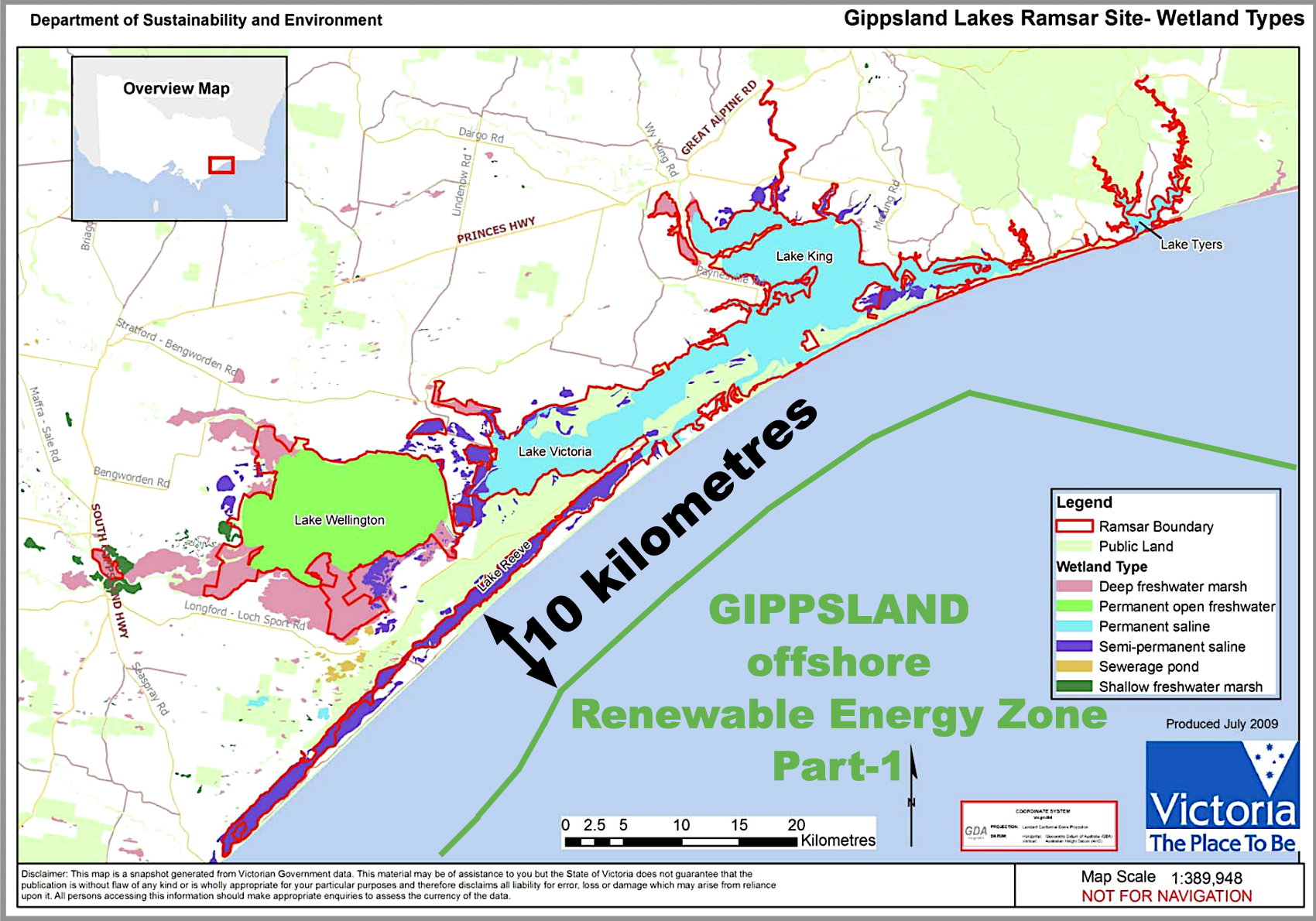
The Gippsland coast hosts two Ramsar Sites. One in the north and the other at the southern end of Ninety Mile Beach. A Ramsar Site is a wetland designated under the Ramsar Convention, which is an international treaty for wetland conservation, recognizing sites of "International Importance" for biodiversity. These sites represent unique or rare ecosystems that provide crucial waterfowl habitats, with members agreeing to manage them sustainably. Australia was a pioneer by designating the world's first Ramsar site in 1974. We now have over 60 sites protecting diverse wetland types like marshes, estuaries and forests from coastal to subalpine bogs. The Gippsland offshore Renewable Energy Zone poses an unaceptible risk to these critical habitats.
RAMSAR Site-1; Gippsland Lakes
The Gippsland Lakes Ramsar Site is one of twelve wetlands listed under the Ramsar Convention in Victoria and recognised for its significant coastal wetland values that feature critical habitats for migratory bird species. The Ramsar Site also supports other crucial ecosystem services, including nationally and internationally threatened wetland species, waterbird breeding and fish spawning sites. The Gippsland Lakes are an important tourism destination for the region, which supports commercial and recreational fisheries, boating, camping and general visitation activities.The Gippsland Lakes communities rely heavily on its pristene environment to draw in tourests. The propposed offshore wind projects present a potentual threat to not only the environment and or the Ramsar Site listing, but the susstainability of the villages of Ninety Mile Beach lays in the ballance.
Unique Habitats
The area protects diverse habitats, including the world's most southerly population of white mangroves, extensive saltmarsh areas and vast broad-leaf seagrass meadows that act as a nursery for numerous fish species. The park and Ramsar site support a rich variety of marine life, including over 300 species of marine invertebrates like crabs, sea stars and iridescent squid. As well as fish species such as Pipefish, Stingarees, Flathead, and Whiting. It is also home to nationally threatened bird species, including the Orange-bellied Parrot and Eastern Curlew, which rely on the site's rich feeding and roosting areas.Biodiversety
The Gippsland Lakes support a diverse range of over 90 species of waterbirds and approximately 300 native fauna species.Waterbirds: Australian Pelicans (one of Australia's few permanent breeding rookeries), Black Swans, Chestnut Teals, Pacific Black Ducks, various cormorants, herons and egrets.
Raptors: The majestic White-bellied Sea-Eagle is a prominent, vulnerable species in the region.
Parrots and Bushbirds: Common land birds include Galahs, Rainbow Lorikeets, Crimson and Eastern Rosellas, Australian Magpies, Kookaburras, and Superb Fairy-wrens. Reed beds provide habitat for smaller birds like the Golden-headed Cisticola.
Seagrass Species
The Gippsland Lakes contain four species of seagrass: Zostera muelleri, Heterozostera tasmanica, Ruppia spiralis, and Lepilaena cylindrocarpa. These underwater flowering plants form important marine habitats that provide food, shelter and nursery areas for juvenile fish and other marine life.Fish Species
Common fish species in the Gippsland Lakes include bream, dusky flathead, mulloway, Australian salmon, luderick, and tailor. Other species found in the area are King George Whiting, estuary perch, garfish, trevally, and leatherjacket.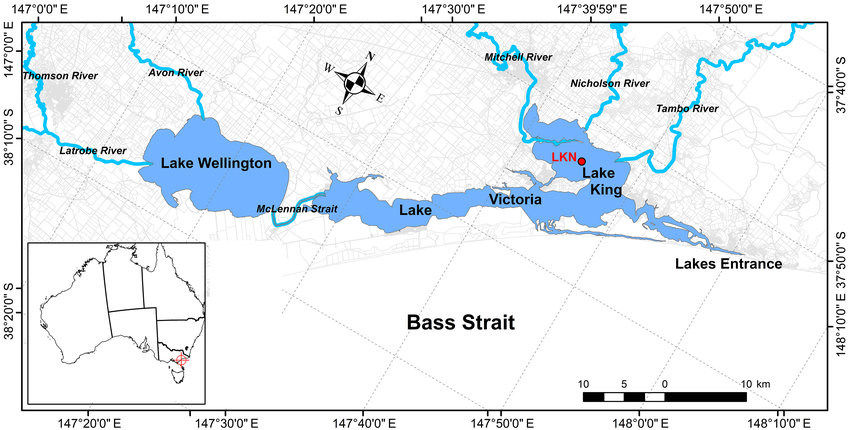
Gippsland Lakes and Major Tributaries
Pelican Rookery
Crescent Island is home to one of the few known permanent Australian Pelican (Pelecanus conspicillatus) breeding colonies in Australia that's located in the Gippsland Lakes, Victoria. The colony is a significant site for observing these iconic birds in their natural breeding habitat.Burrunan Dolphin
The Burrunan dolphin (Tursiops australis) is a critically endangered species found in only two known resident populations. One of which is in the Gippsland Lakes and the other is Port Phillip.RAMSAR Site-2; Corner Inlet
The Corner Inlet Ramsar site, designated in December 1982, is the most southerly marine embayment and tidal mudflat system in mainland Australia, covering approximately 67,193 hectares. It is a wetland of international significance, providing a crucial over-wintering habitat and part of the East Asian–Australasian Flyway for migratory wader birds.
The Corner Inlet was designated for its unique barrier islands, extensive seagrass, saltmarsh, mangroves, which is a critical habitat
for a number of migratory waterbird species. This site is mainland Australia's most southerly marine embayment,
featuring rich biodiversity, tidal flats, and cultural heritage for the Gunaikurnai people.
Offshore Power Stations
Thre are four Feasibility Licence holders in close proximety to this Corner Inlet RAMSAR Site; FL-006, Star of the South; FL-010 Great Eastern; FL-001 Blue Mackerel; FL-012 Aurora Green: All will have an impact migrating birds and the wetland ecosystem.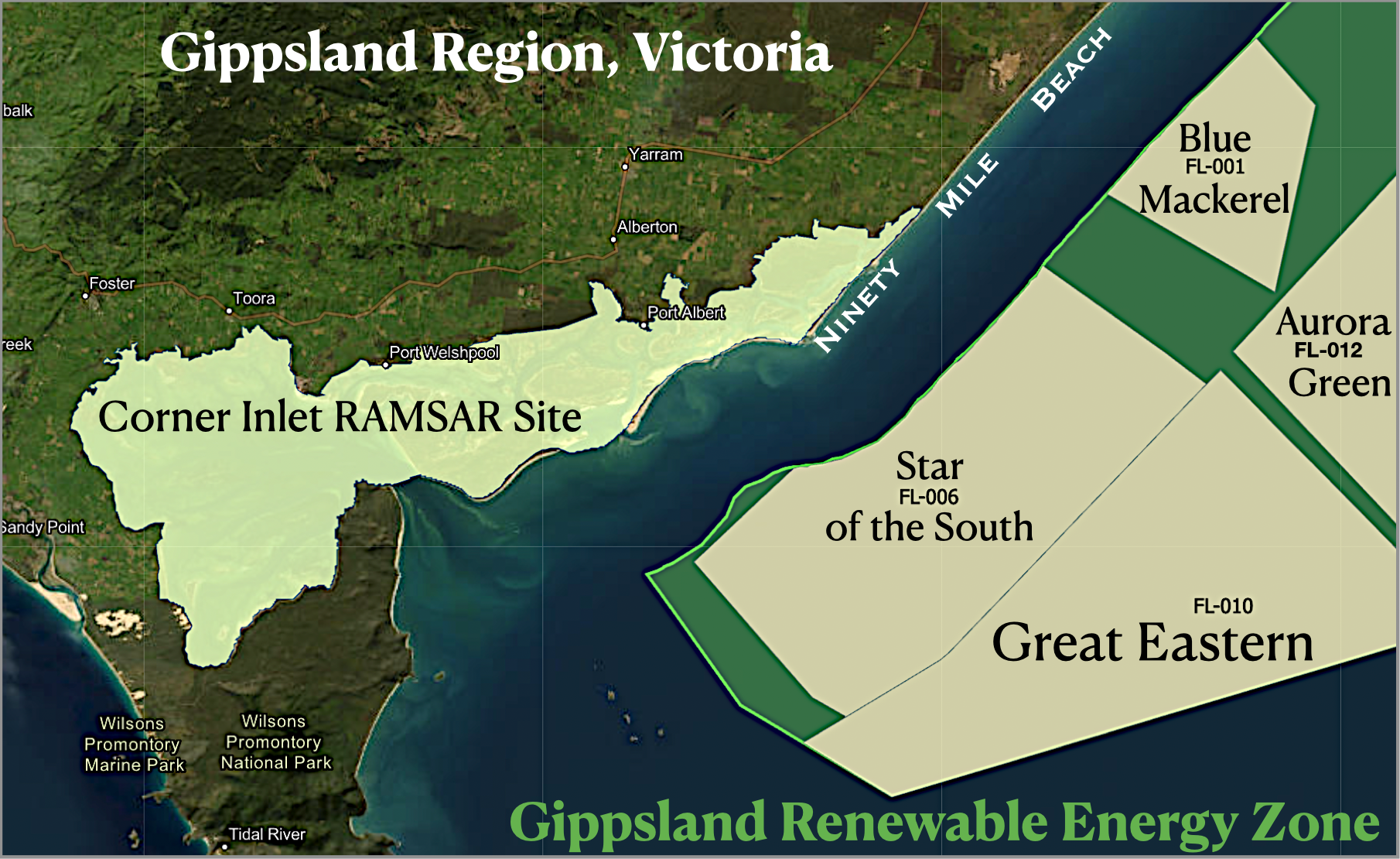
Ramsar Site vs. Renewable Energy Zone
Critical Habitat
The two Ninety Mile Beach RAMSAR Sites are a critical habitat for numerous shorebirds that also supports internationally significant numbers of migratory species like the Bar-tailed Godwit, Red-necked Stint, Curlew Sandpiper and Eastern Curlew. Many travelling the East Asian-Australasian Flyway. Key residents include Hooded Plovers, Pied Oystercatchers and Caspian & Fairy Terns. They utilize the vast mudflats, mangrove forests and barrier islands for feeding and breeding for resident birds.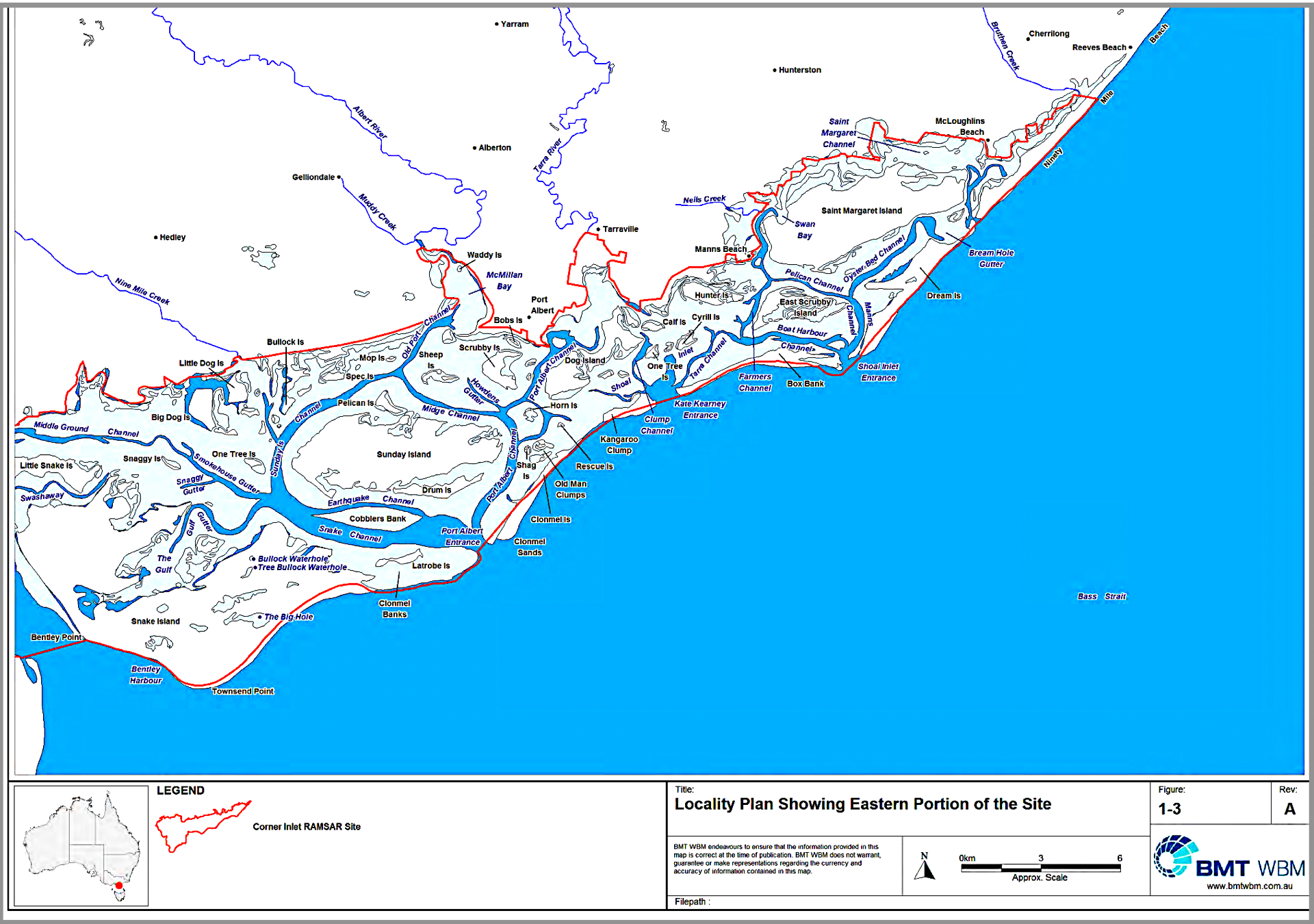
Other Ramsar Sites
Australia has 67 Ramsar wetlands, and 12 are in Victoria. Oversight of Ramsar commitments in Victoria falls under the Department of Energy.
RAMSAR Site-3; Glenelg Estuary - Discovery Bay
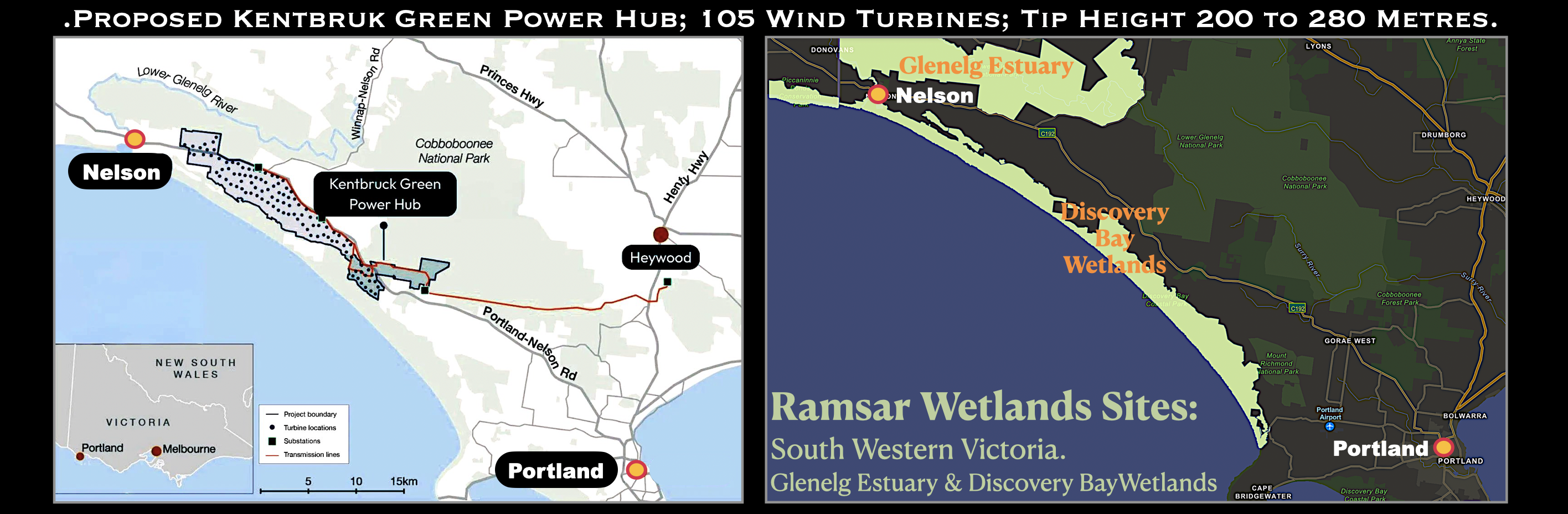
This site is not in the Gippsland district but it is in Victoria, which is threatend by a proposed onshore wind-farm, the "Kentbruk Green Power Hub".Glenelg Estuary and Discovery Bay are internationally significant Ramsar site in southwest Victoria and just metres from the proposed project.
Ramsar site purpose is to protect diverse wetlands, fish migration habitats, and migratory birds, which encompasses parts of the Lower Glenelg National Park and Discovery Bay Coastal Park. And to manage its ecological health and cultural values for the Gunditjmara people.
Key features include Long Swamp, Lake Monibeong, Bridgewater Lakes, sandy beaches, dunes, estuarine habitats and threatened species like Hooded Plovers, vital for sustainable use.
Project
Kentbruck Green Energy Hub is a renewable energy project, consisting of a proposed 600-megawatt (MW) wind farm. As of January 2026, the project has reached a critical milestone following the completion of its environmental assessment.Environmental Approval
On December 22, 2025, the Victorian Minister for Planning issued an assessment concluding that the project's environmental effects can be acceptably managed, provided specific recommendations and mitigation measures are implemented.Let's hope these "measures" include wind turbine curtailment, which involves temporarily stopping or slowing turbines during high-risk periods (like peak migration) to reduce bird collisions and fatalities.
Especialy so considering the fact that this project sits between the Glenelg Estuary and Discovery Bay RAMSAR Wetland Sites.
Ownership Transition
Originally developed by Neoen Australia, the project is now owned by HMC Capital as part of a $950 million acquisition of Neoen’s Victorian portfolio.Project Status
The project is now moving into the statutory approval phase, with construction tentatively anticipated to begin in 2026, if final permits are granted.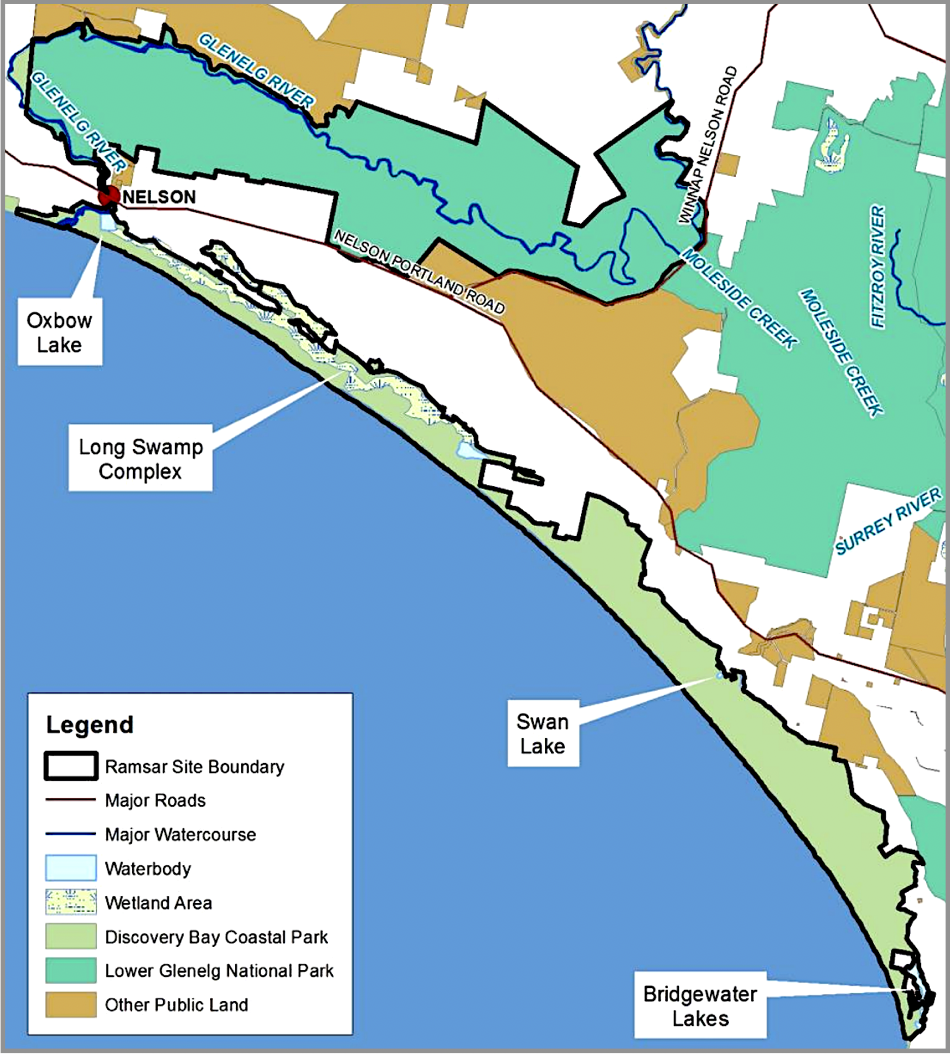
Ramsar Site vs. Renewable Energy Zone
Southern Ocean Renewable Energy Zone
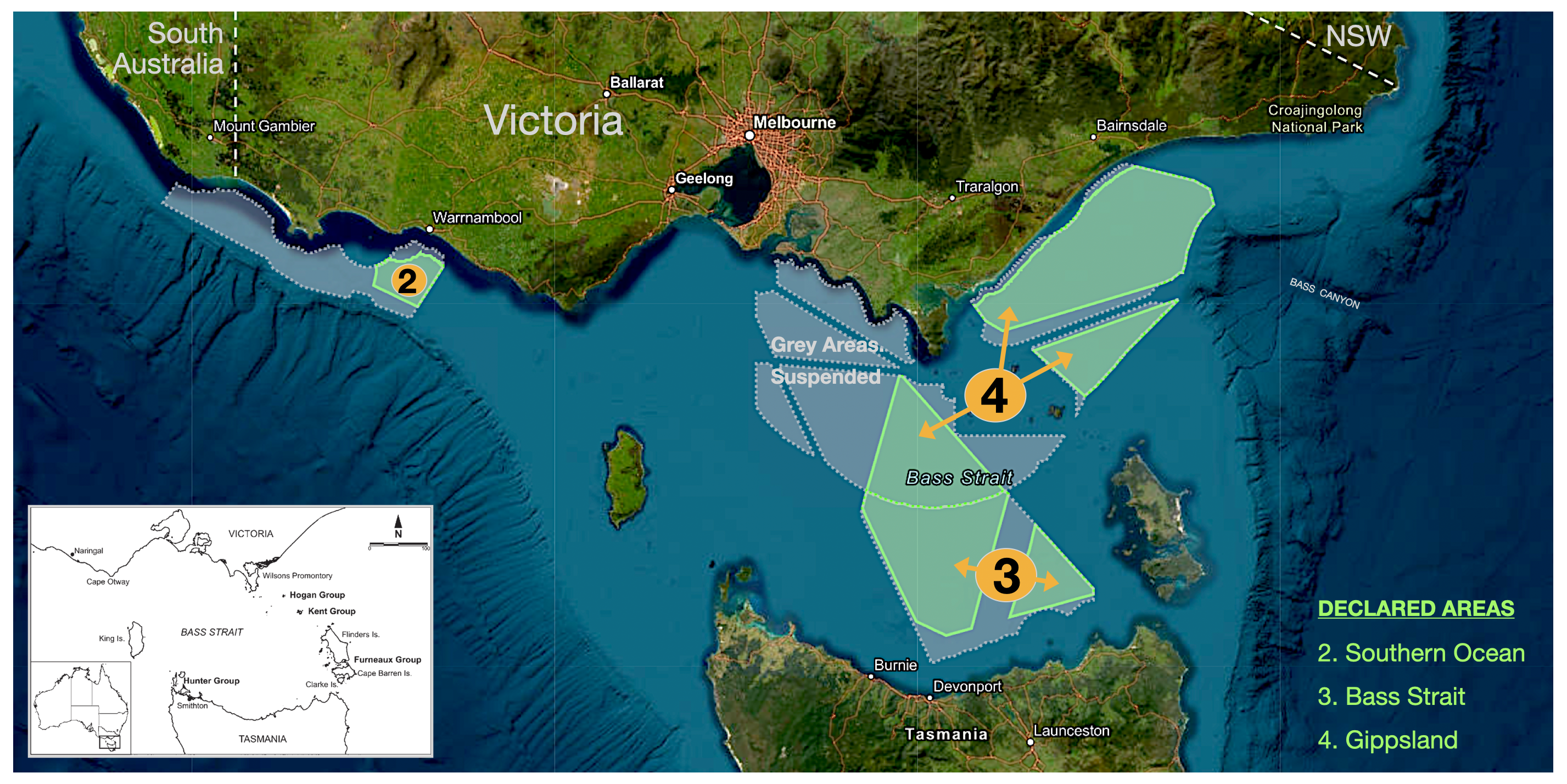
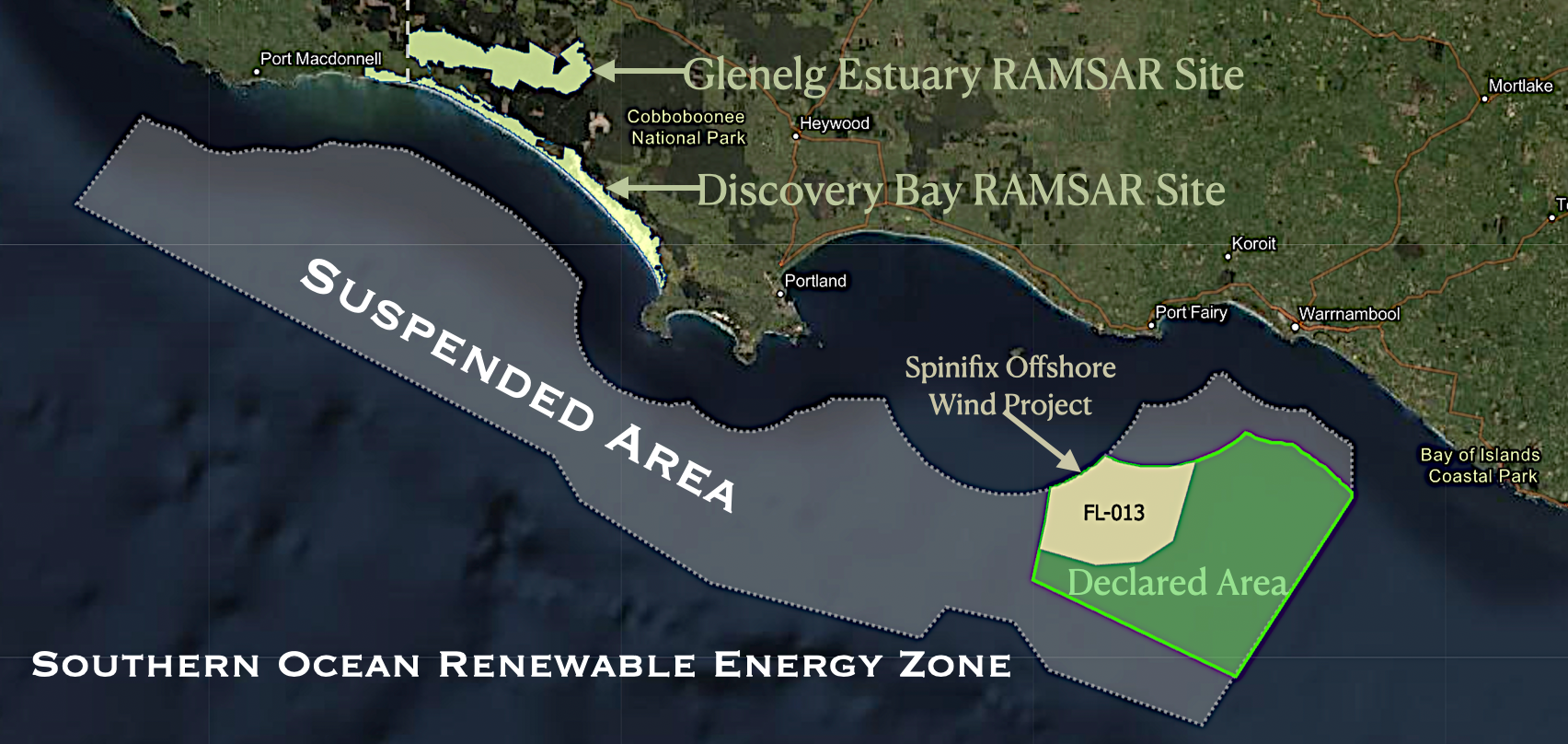
The suspended area on the image below represents an 80% reduction of the proposed REZ, which resulted from succsefull campaigns against this offshore project.Imagine if no one complaigned, the outcome could have been a 100% declared area at the expense of the environment and fishing industry.
The proposed offshore REZ was just 10 kilometres offshore, which was deemed an unaceptable risk to the environment.
The Kentbruck Green Energy Hub onshore site is within metres of the RAMSAR Sites. So why would the minister give the developers an environmental approval on the 22nd of Decenber 2025?
Turbine Threat to Birds
Offshore wind farms pose several threats to migrating birds and other creatures, which are primarily through direct collisions and the displacement of animals from vital and critical habitats. They also create a masive "barrier effect" that can cause behavioral changes, leading to traditional migration routes and or flyways being avoided or abandond.Barriers to Movement
The avian "barrier effect" describes how wind farms, particularly those located along migratory pathways create obstacles that force birds to change their usual flight paths. This effect can disrupt migration and increase energetic costs for birds trying to avoid wind turbines, which potentially leads to population declines."Resident birds" may also be deterred from using their normal routes to and from feeding and or roosting grounds.
The Gippsland offshore Renewable Energy Zone covers an area of 1,500,000 hectares (3,706,581 acres) with up to 1,666 of the world's biggest turbines. The adjoing Bass Strait Renewable Energy Zone covers an area of 710,000 hectares (1,754,448 acres) with up to 1,333 turbines. Which is an enormous barrier for not only animals, but also existing users like fisherman.
Typical Wind Farm
Collision
Direct Collision happens when birds and bats are physically struck by turbine blades.Bird collisions with wind turbines are a risk caused by factors like the "motion smear" of spinning blades. Turbine blades may appear to be spinning slowly, but that is just an optical illlusion.Tip speeds tip speed for a 15 MW wind turbine is 95 metres per second, which is approximately 342 km/h (212 mph).Barotrauma
Wind turbines kill hundreds of thousands of bats annually in North America alone, with global figures reaching millions. While direct collisions (blunt force trauma) with fast-moving blades are the primary cause, turbulence and rapid air pressure changes may also contribute to fatalities via internal organ damage, a phenomenon known as barotrauma.Displacement
Bird displacement from wind farms occurs when birds avoid areas within and around wind farms due to disturbance, resulting in functional habitat loss. This effect, along with collision mortality and the "barrier effect" on migration routes, is a key concern for avian conservation. Habitat loss is the first step down the road to extinction for many animal species.Turbine Evolution
The IEA 15-Megawatt Offshore Reference Wind Turbine is a standardized, open-source wind turbine design model created for research and development purposes. This is the unit used in the goverment's propaganda and the mock visualisations. Typical wind-farms use up to 8MW turbines, but the units bound for Australian projects are twice the size of the ones overseas.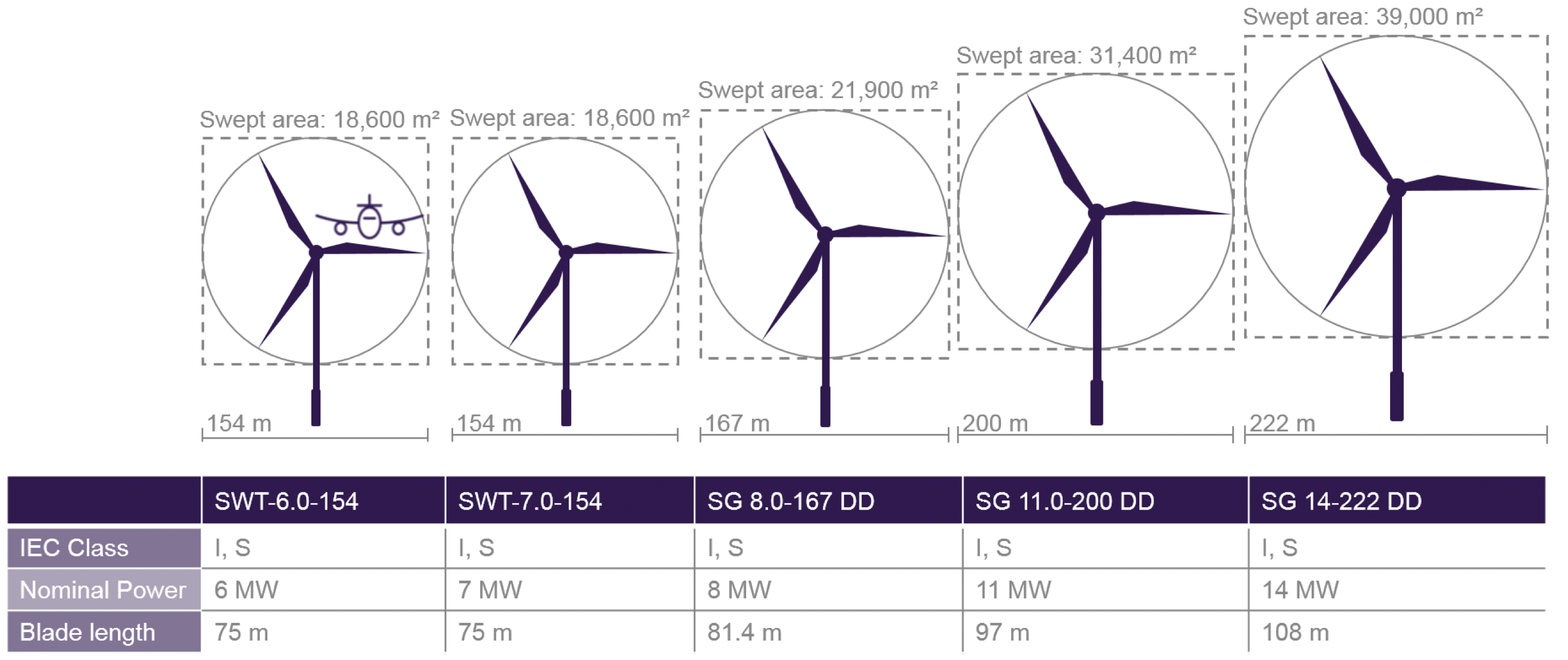
Rotating Blades
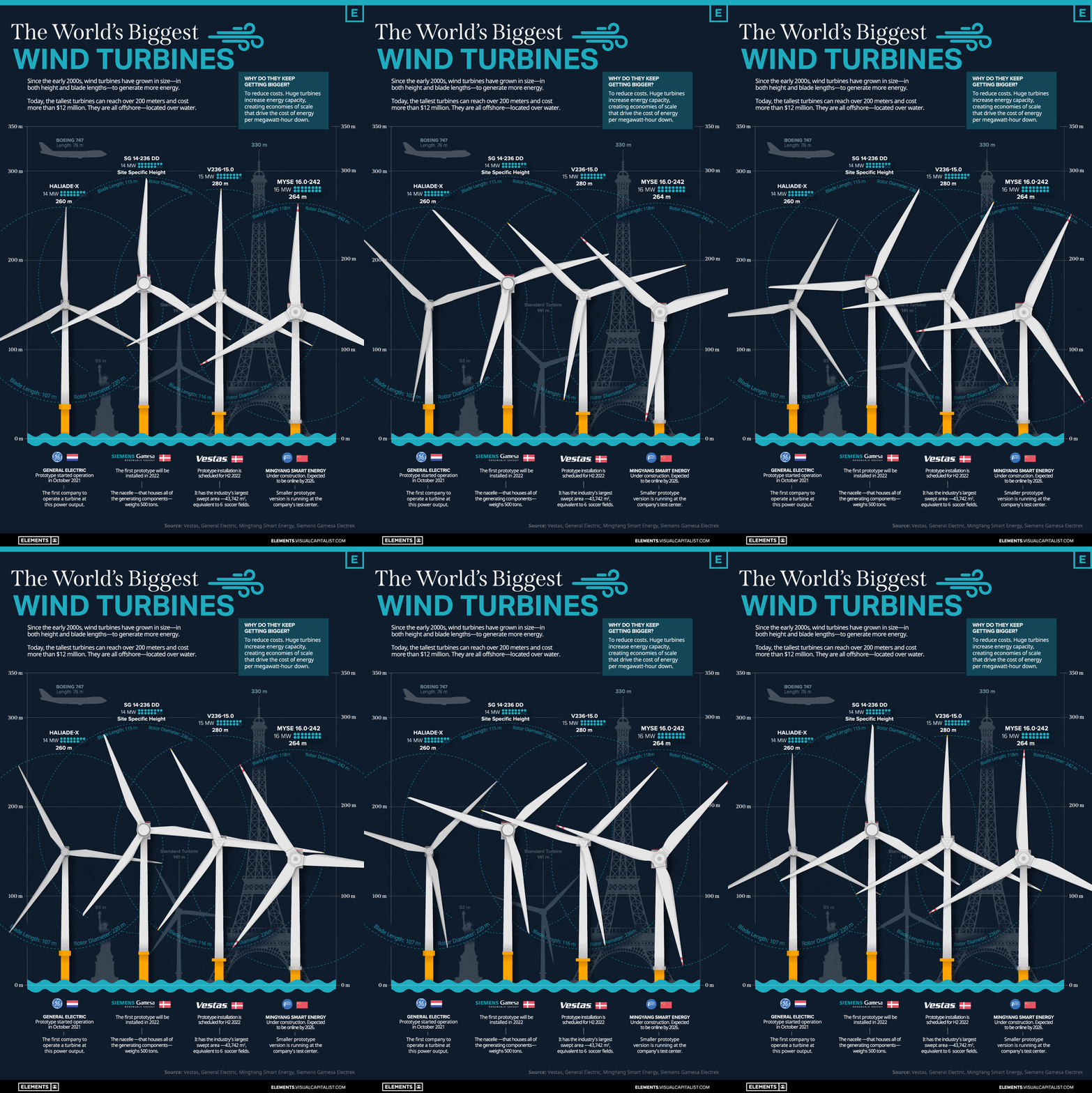
Turbine blades may appear to be turning slowly, but this is just an optical illusion. Much like a jumbo-jet coming in to land. The maximum blade tip speed for a 15 MW wind turbine is 95 metres per second, which is approximately 342 km/h (212 mph). This is a design specification for large offshore turbines like the "IEA 15 MW reference turbine" and the Vestas V236-15.0 MW. Which is a critical parameter for balancing performance, noise, and structural integrity.
Bird Deaths
Onshore wind turbines in Tasmania have caused significant bird deaths, particularly to endangered wedge-tailed eagles and vulnerable white-bellied sea-eagles, with a study documenting at least 268 deaths and 53 injuries between 2010 and 2022. The proposed offshore wind farms cover millions of acres in Bass Strait. These offshore wind projects will have a massive impact on both migrating and resident birds flying between the Australian mainland and Tasmania.Robbins Island Wind Farm
"The proposed Robbins Island project is a bird killer" is a quote from Bob Brown, who is a prominent opponent of the Robbins Island Wind Farm project in Bass Strait Tasmania. Primarily due to the severe risks he and his foundation believe it poses to critically endangered wildlife and the island's unique ecosystem.Stop the Robbins Island Wind Farm
Propprosed Renewable Energy Zones
No thought or consideration was ever given to the environment or existing users of an area in the governments flawed selection process for all six offshore Renewable Energy Zones.If no one complained the REZ would have been much larger as the grey parts show in the image below, which are classed as "suspended areas", which is a big win for the people and the environment. The biggest win was the SOUTHERN OCEAN REZ (2), with the 80% reduction in the prosed site. The GIPPSLAND REZ (4) also had a big win with approx a third or more removed. BASS STRAIT REZ has a modest reduction, but 74 % of submissions raised concerns relating to environmental impacts. The most common concern related to potential collisions risks for migratory birds and noise impacts upon whales. The negative impact on the environmet is top of the list of concerns for all six offshore Renewable Energy Zones.