Gippsland Lakes
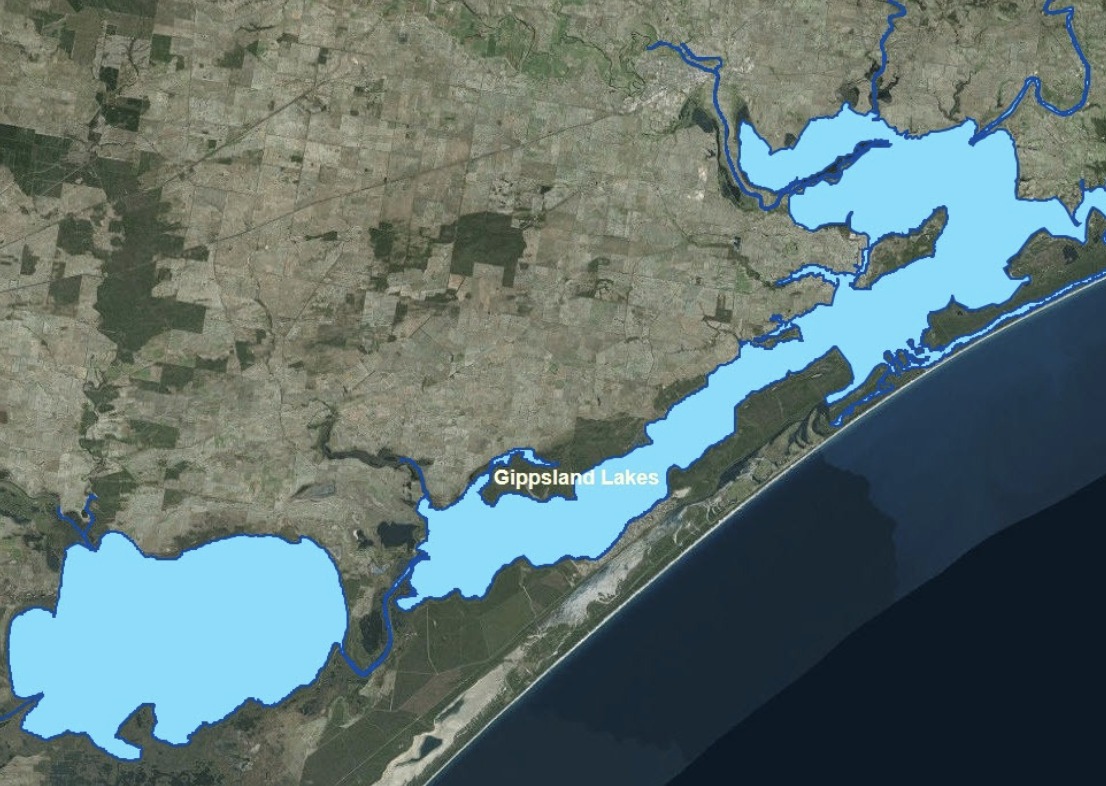
Gippsland Lakes are Australia's largest inland waterway system and a significant asset for state tourism. The lakes are also a critical habitat for waterbirds and a wide range of other animals. With over 400 indigenous plant species and 300 native wildlife species, this region is a paradise for nature lovers and conservationists alike. Why not plan your next holiday to include the Gippsland on Victoria's coast and see for yourself, this pristene location.The Lakes system are a network of coastal lagoons, marshes and wetlands in East Gippsland, Victoria Australia.
Comprising of the large lakes; King, Wellington and Victoria, which are separated from the Tasman Sea by "Ninety Mile Beach".
Several rivers feed into the lakes, including the Mitchell, Nicholson, Tambo, Latrobe and Avon.
Gippsland Lakes Coastal Park
The South East Marine Park Network of Victoria includes 13 marine parks, covering more than 226,000 square kilometres or 22,600,000 hectares.Description
Gippsland Lakes Coastal Park is famously known for its narrow coastal strip of lakes, wetlands and sand dunes, offering a variety of activities for visitors. e.g. camping, fishing, surfing, boating etc.Gippsland Coastal Park (link)
.
Location
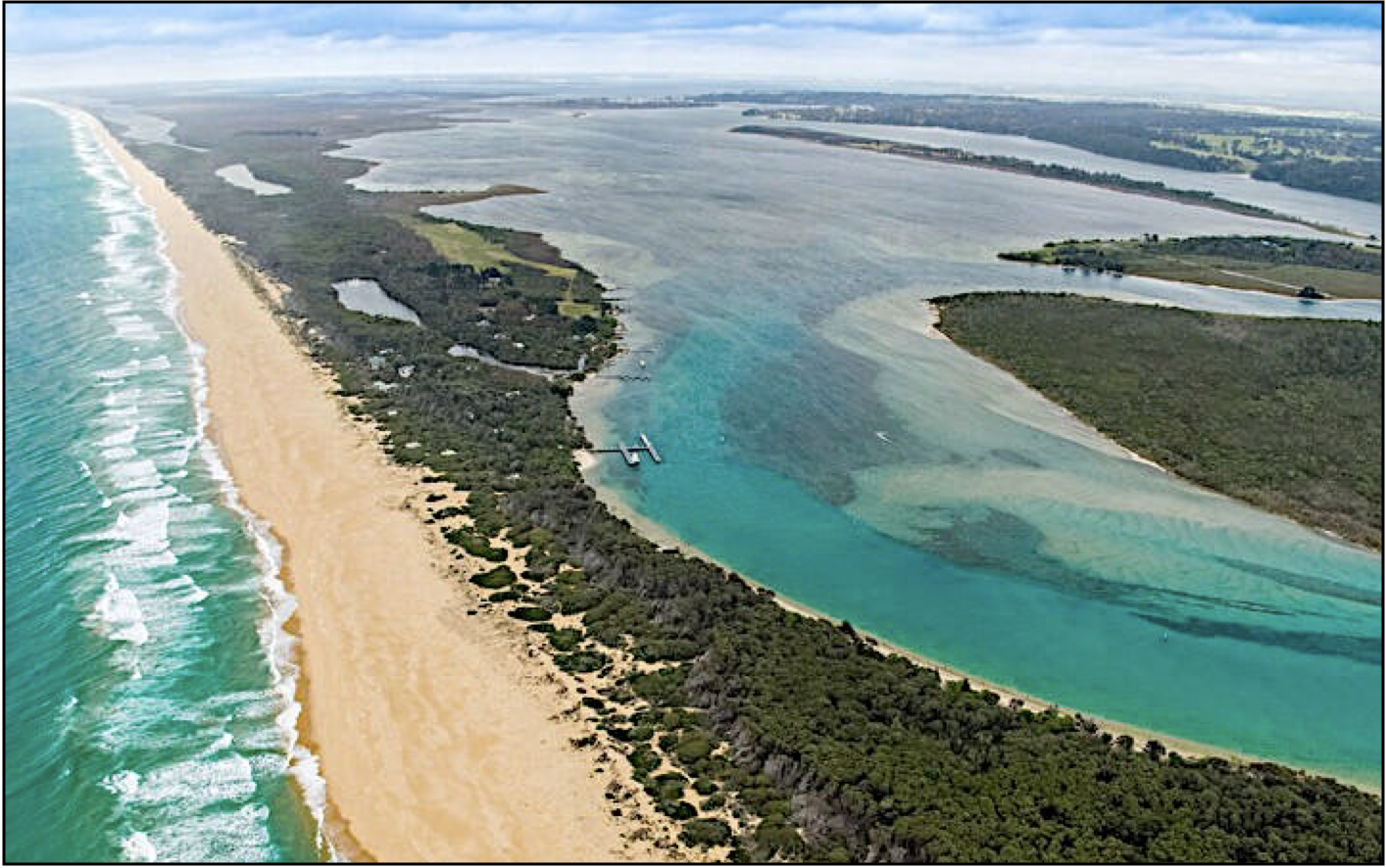
Coastal Park is a reserve in East Gippsland, Victoria that stretches along a section of the Ninety Mile Beach between Seaspray and Lakes Entrance (image right).Camping
Designated campsites are situated between Paradise Beach and The Honeysuckles along Shoreline Drive at Golden Beach. Boat based bush campsites are available at Bunga Arm east of Steamer Landing. Bush campsites are also available at Red Bluff and Spoon Bay..
VISITORS GUIDE (link)
The coastal reserve covers an area of 17,584 hectares, which consists of a network of waterways thats separated from Bass Strait by a thin strip of coastal dunes and "90Mile Beach".
The coastal reserve covers an area of 17,584 hectares, which consists of a network of waterways thats separated from Bass Strait by a thin strip of coastal dunes and "90Mile Beach".
A Biodiverse Rich Area
The Gippsland Lakes are a system of high biodiversity, especially for waterbirds and aquatic life that are recognized as a Ramsar Wetland of International Importance. They support over 20,000 waterbirds annually, including a unique Australian pelican colony at Crescent Island, which is also a home to many fish and plant species..
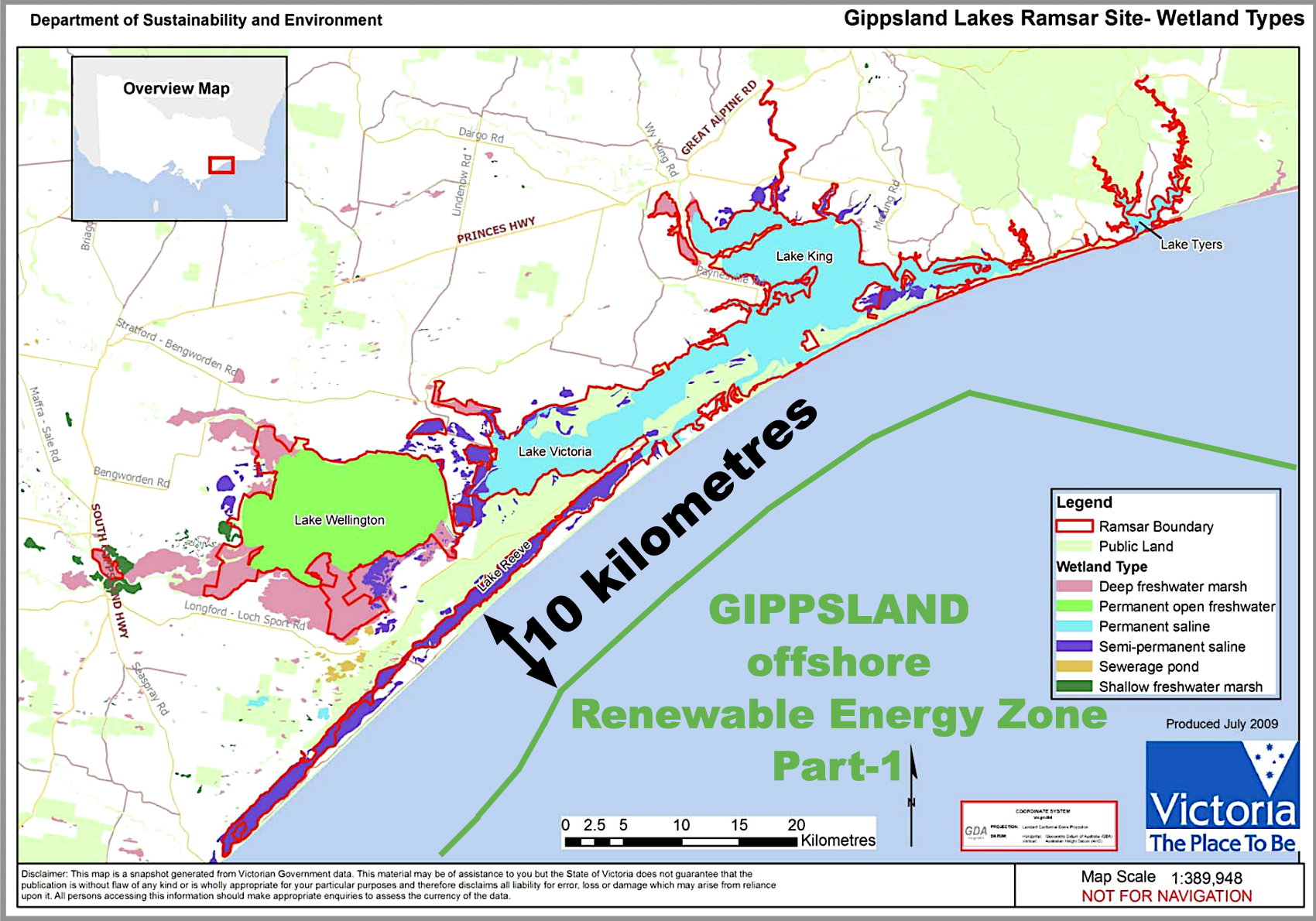
Ramsar Site
Description
The Gippsland Lakes are a Ramsar site in Victoria, listed in 1982 for their international importance as coastal wetlands. The site, which includes the lakes and their surrounding catchment is protected under the international Ramsar Convention for its diverse ecological values, including its unique fish populations.Location
The Gippsland Lakes system is a large group of coastal lagoons separated from the sea by the Ninety Mile Beach. It includes major lakes like Victoria, Wellington, and King, and is fed by several river systems..
What is a Ramsar Site
A Ramsar site is a wetland that has been designated as being of international importance under the Ramsar Convention, a treaty focused on the conservation and wise use of wetlands. These sites are chosen for their ecological, botanical, zoological, limnological or hydrological importance and must meet at least one of nine criteria. Such as supporting large populations of animals and plants, providing habitat for threatened species or being unique.Once designated, countries commit to managing the site to maintain its "ECOLOGICAL CHARACTER"
.
Gippsland Renewable Energy Zone
Description
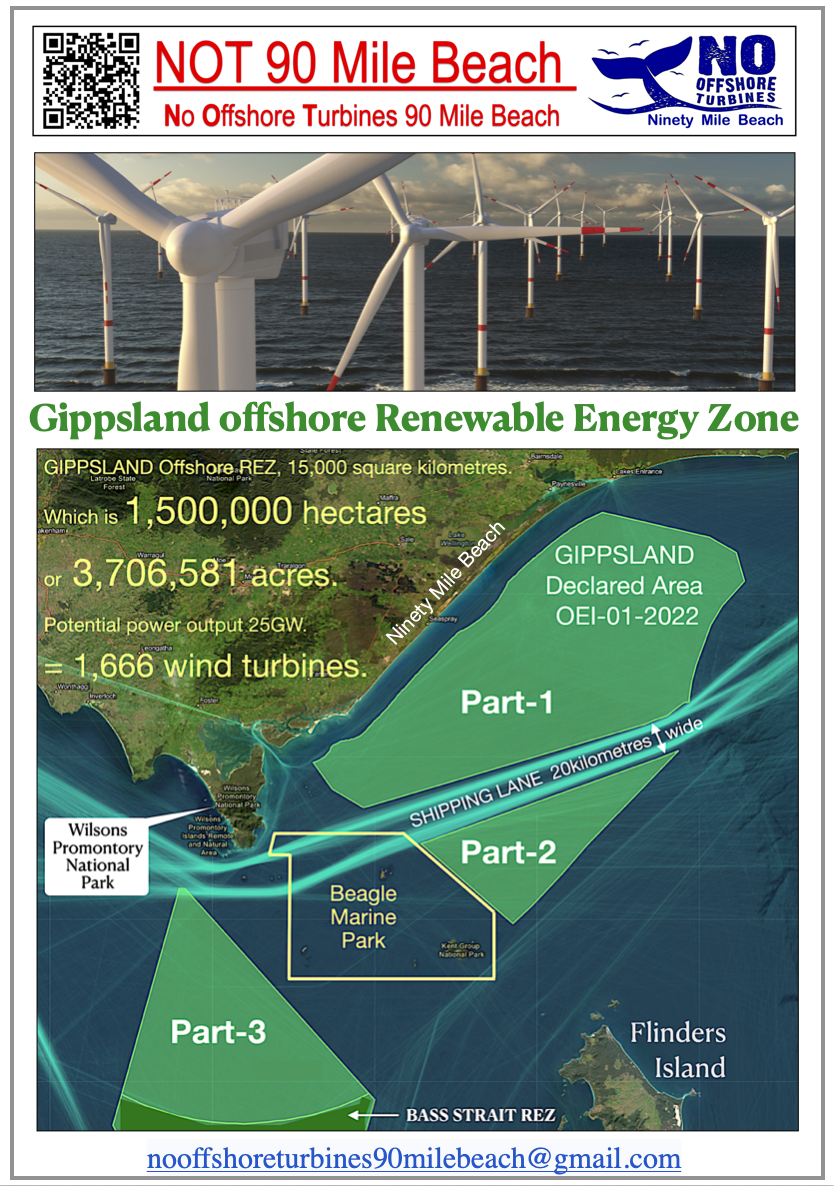
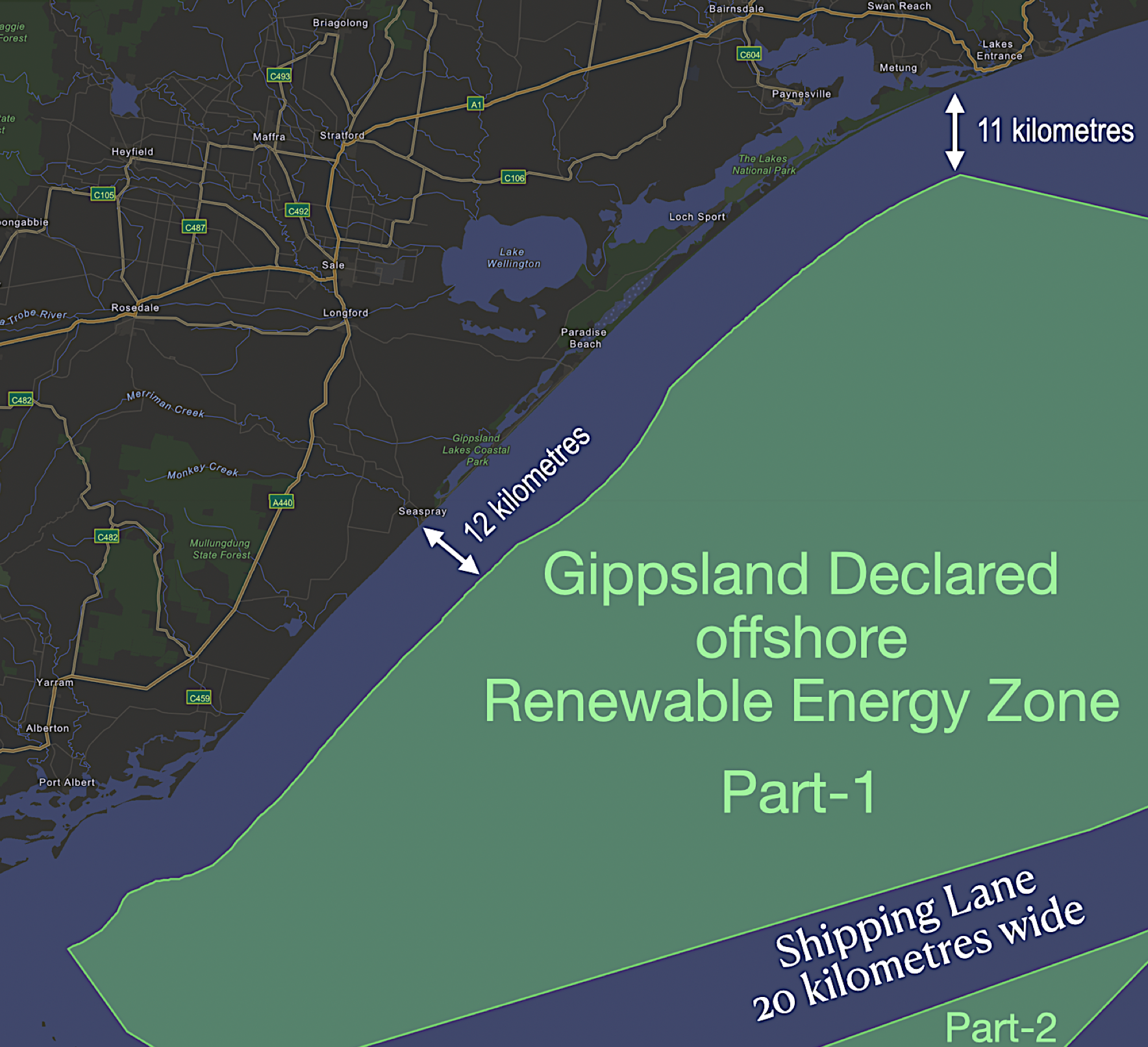
Chris Bowen Minister for Climate Change and Energy declared an area off Gippsland, Victoria, as suitable for offshore renewable energy projects, including wind on 19 December 2022..
Details
1. Declared area maximum size: 15,000km2 or 1,500,000 hectares(3,706,581 acres)
2. Potential power generation: 25GW
3. Number of 15MW Wind Turbines: 1,666
4. Number of offshore sub-staions is approx. 3 per 100 turbine ratio.
Based on water depth approx 70% of turbines would be fixed-to-bottom foundations. Floating turbines are for deep water sites , which is approximately 30% of the Gippsland Renewable Energy Zones. .
Declared Renewable Energy Zone
Critical Habitats
The Gippsland Lakes critical habitat includes diverse wetland environments like shallow and deep lakes, seagrass beds, and fringing wetlands, providing vital habitat for a wide range of species, especially waterbirds. Listed below are just two examples.Burrunan Dolphins
The Gippsland Lakes are home to the Burrunan dolphin (Tursiops~australis), a species endemic to southeastern Australia, which is listed as critically endangered. The Gippsland Lakes population, estimated to be around 65 individuals, which is one of only two resident populations in Victoria, the other being in Port Phillip Bay.Pelican Rookery
There is a limited number of permanent Pelican breeding colonies known in Australia with the Crescent Island colony on the Gippsland Lakes being one.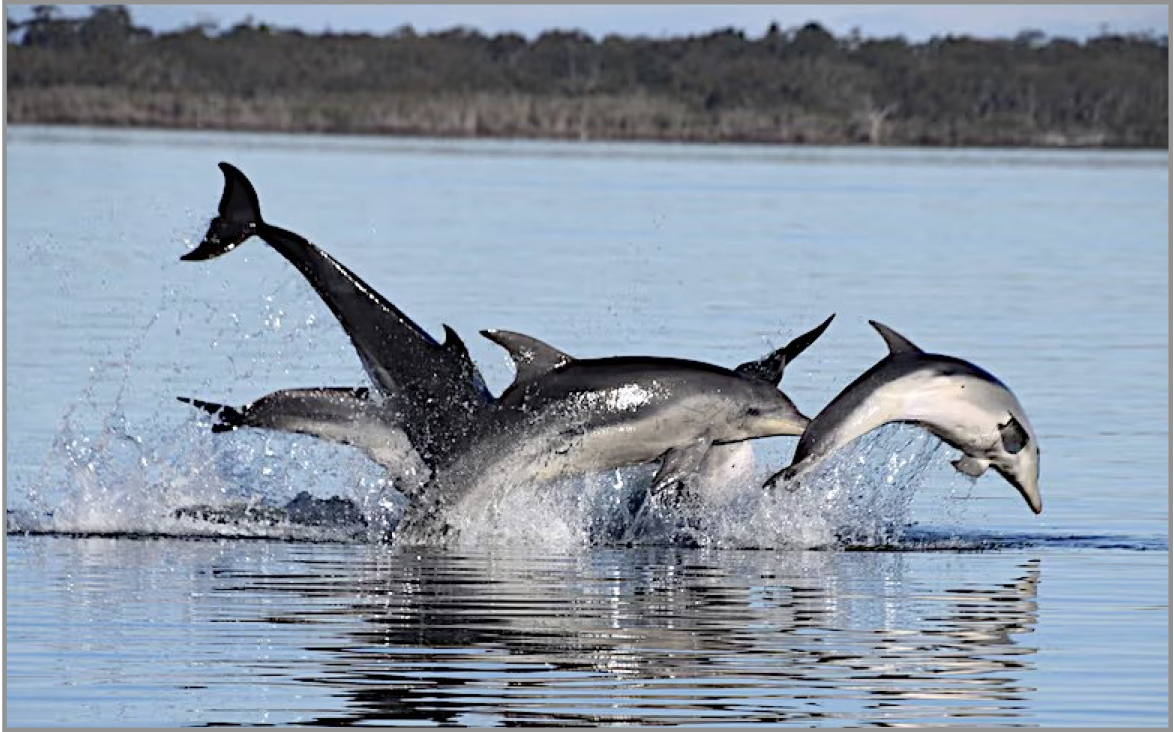
Burrunan Dolphins
East Asian-Australasian Flyway
The EAAF is one of the world's major migratory bird routes, extending from the Arctic Circle (Siberia and Alaska) southwards through East and Southeast Asia to Australia and New Zealand. It encompasses 22 countries and supports over 50 million migratory waterbirds from more than 250 populations, including many globally threatened species. The Gippsland Lakes supports over 20,000 waterbirds including both resident and migratory birds and endangered species.Migratory Birds
The Gippsland Lakes are a vital stopover for migratory birds traveling along the East Asian-Australasian Flyway, with over 90 species of waterbirds, including important migratory species like the Bar-tailed Godwit, Red-necked Stint, Sharp-tailed Sandpiper, and Latham's Snipe. These birds fly long distances, with some traveling up to 26,000 km round trip from breeding grounds in the northern hemisphere to the Gippsland Lakes for the non-breeding season. The lakes' extensive intertidal mudflats provide crucial habitat for them to rest and refuel..
Resident Birds
This term emphasizes that the bird lives in the same location year-round, rather than moving to different breeding and non-breeding grounds. Which are the group most likly to be displaced by impact of wind turbines..

East Asian-Australasian Flyway
Blue lines are produced using archived weather radar data,
which are the actual flightpaths of migratory birds.
Blue lines are produced using archived weather radar data,
which are the actual flightpaths of migratory birds.
Collision Threat
Bird collisions with wind turbines are a known issue, resulting from complex interactions between specific species, site characteristics and turbine features. The primary threat to birds is from turbines is direct collision with the rotating blades, which some species struggle to perceive as a solid hazard..
Motion Smear
Turbine blades can appear as an invisible blur due to their high rotational speed, making them difficult for birds to detect as an obstacle. Poor visibility due to rain, mist, or low light levels can make turbines harder to see..
Bird Behaviour
Birds, particularly large raptors like eagles and vultures, often focus their vision downward when foraging, which means they may not be looking ahead and fail to notice an approaching turbine in their flight path..Poor Site Selection
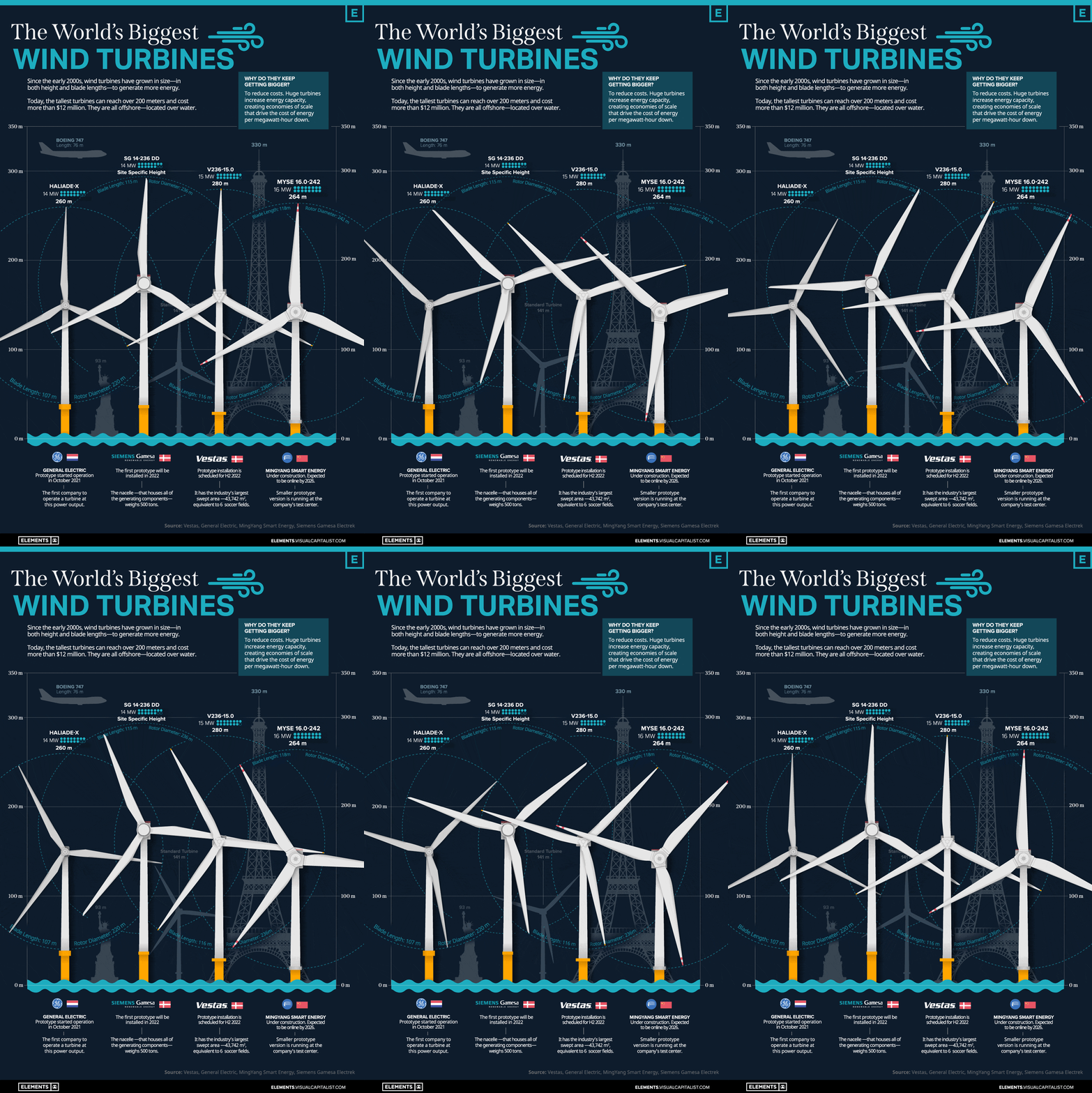
Placing wind farms in areas with high bird traffic, such as migratory routes or near breeding/foraging grounds, significantly increases the risk of collision.Note the small turbine in the cenre of the image right. This is the standard 8MW units used overseas. The giant 15MW turbines in the forground are for Australian projects.
Rotating Blades
They may appear to be rotating slowly but thats an optical allusion, much like a jumbo-jet coming in to land. The maximum blade tip speed for the reference IEA 15-megawatt (MW) wind turbine is approximately 95 meters per second (m/s), or about 213 mph (342 km/h). The Vestas V236-15.0 MW model has a rated tip speed of 104 m/s.